


Article: Why Does Sterling Silver Tarnish?
Why Does Sterling Silver Tarnish?
Sterling silver tarnishes because silver reacts with sulphur compounds in the air, forming a thin surface layer of silver sulphide — first yellow, then brown, then grey-black. Humidity, skin acidity, perfume, and chlorine all speed it up. Tarnish is not damage and not a sign of fake silver — the opposite: genuine silver tarnishes, many imitations don't. It lifts away completely, and sealed dry storage plus putting jewellery on last will slow it dramatically.
You bought a beautiful silver ring. A few weeks later it looks a little tired — a faint yellow warmth, then a dull grey creeping into the details. Your first thought is the worst one: is it fake? It almost certainly is not. In fact, tarnishing is one of the clearest signs that a piece is real silver — plated and silver-toned imitations often do not tarnish the same way at all. What you are seeing is genuine sterling silver behaving exactly as genuine sterling silver has for centuries. Understand why it happens, and you can slow it to a crawl.
What Is Tarnish on Sterling Silver?
Tarnish is not dirt, not rust, and not damage. It is a chemical reaction on the surface of the metal — and the distinction matters, because it changes how you think about it entirely.
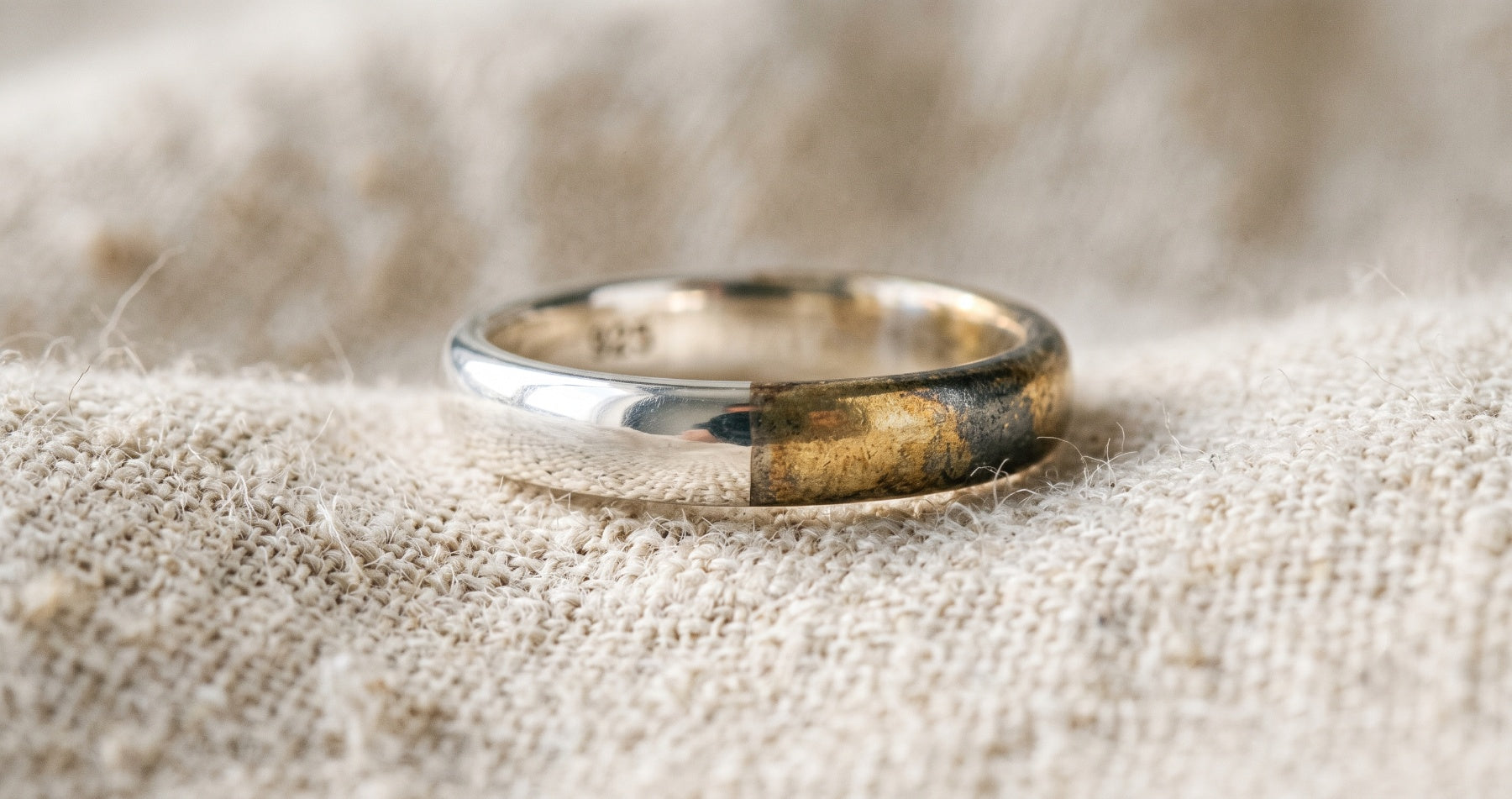
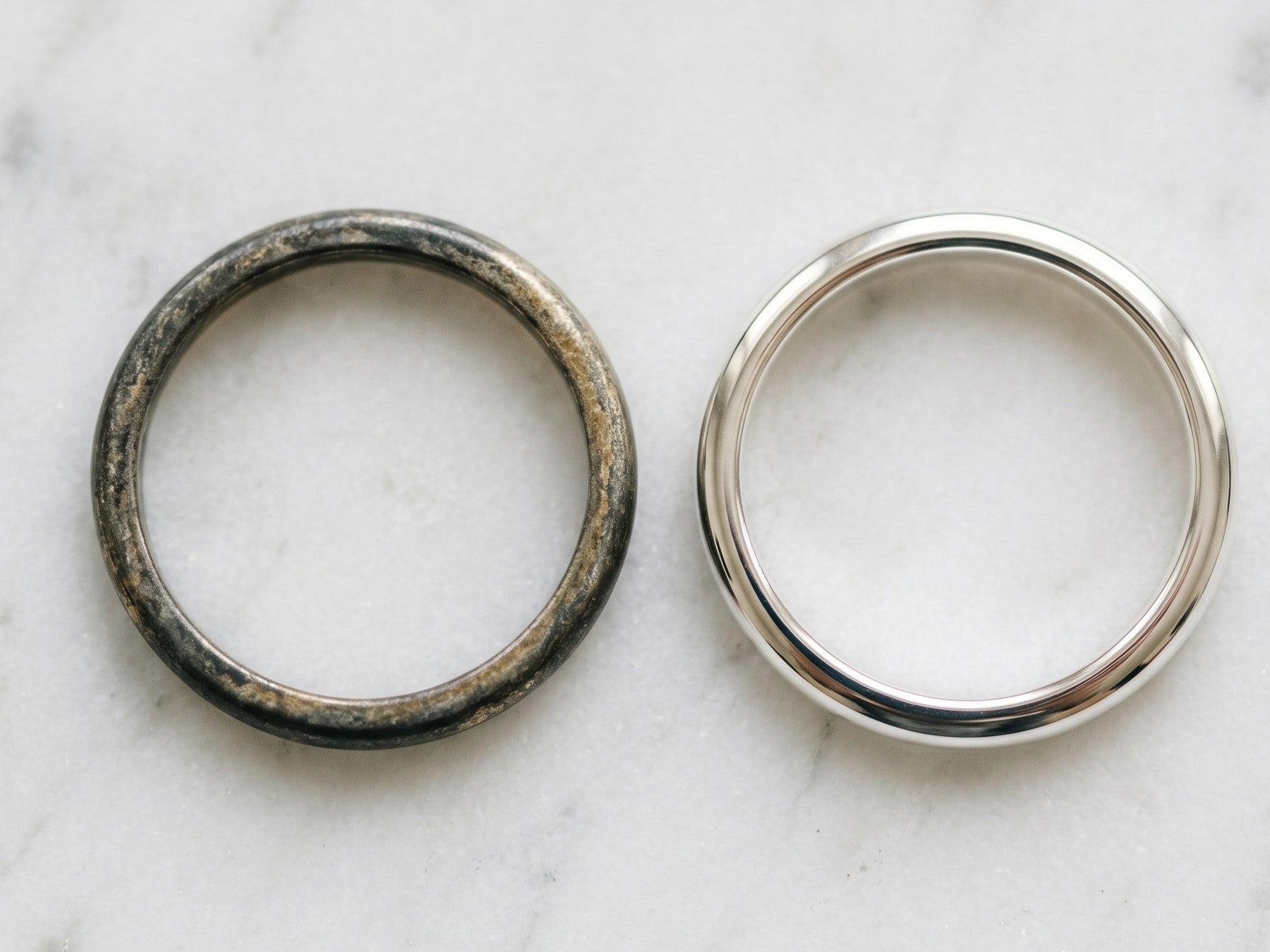
Sterling silver is 92.5% pure silver alloyed with roughly 7.5% copper for strength. When the surface meets certain compounds in the air — chiefly sulphur — it forms a microscopically thin layer of silver sulphide (Ag₂S). That layer is what you see, and it develops through a predictable colour progression:
Every stage is a surface layer only — and every stage is fully reversible.

Here is the reassuring part. Tarnish sits on top of the metal. It has not eaten into your jewellery, and it has removed nothing. This is why even a piece that has gone nearly black can be brought back to a full shine — the bright silver is waiting, untouched, just beneath the surface.
Tarnish vs Rust — The Critical Difference
The comparison people instinctively reach for is rust, and it is exactly the wrong one. Rust destroys the metal it forms on — iron oxide flakes away, taking the metal with it, and the loss is permanent. Tarnish does not. Silver sulphide forms a stable, paper-thin film that lifts away cleanly, leaving the silver beneath unchanged. A cast-iron pan left to rust for a decade is ruined; a silver ring left to tarnish for a decade needs ten minutes and a gentle clean.
Rust destroys the metal it forms on. Tarnish does not. Because your AG925 piece is solid 925 sterling silver, that surface layer can be lifted away again and again — the metal underneath is the same, all the way through.
— AG925 StudioWhat Causes Sterling Silver to Tarnish?
Tarnish is a reaction, which means it needs something to react with. Almost every cause comes down to sulphur, moisture, or acidity meeting the silver's surface. Once you know the triggers, most of them are avoidable — and knowing which ones matter most tells you where to focus.
| Cause | Why It Tarnishes Silver | How Much It Matters |
|---|---|---|
| Air & humidity | Airborne sulphur compounds (largely hydrogen sulphide) react with the surface constantly; moisture accelerates every stage of the reaction | The biggest everyday factor |
| Cosmetics & perfume | Lotions, hairspray, sunscreen, and fragrance contain compounds that attack silver directly on contact | High — the leading hidden cause |
| Skin chemistry | Sweat, natural oils, and skin acidity accelerate the reaction — and vary significantly from person to person | High, and very individual |
| Chlorine & salt water | Pools and the sea are harsh oxidising environments that attack silver rapidly during exposure | High during exposure |
| Certain foods | Eggs, onions, and other sulphur-rich foods tarnish silver on direct contact — the classic reason silver cutlery darkens | Occasional |
| Storage materials | Some woods, wool, felt, newspaper, and especially rubber release sulphur continuously — a rubber band on a silver bangle can leave a permanent mark overnight | Surprisingly common |
Why Does My Silver Tarnish Faster Than Someone Else's?
Two people can buy the identical ring and see completely different results within a month. That is not a quality difference — it is a chemistry difference, and it usually comes down to three factors:

Skin acidity (pH) varies naturally from person to person, and shifts with diet, medication, hormones, and stress. More acidic skin reacts more readily with the copper in the alloy — which is also why some people occasionally see a temporary green mark. It is harmless, and washes straight off.
Humid, coastal, or industrial air carries more moisture and more airborne sulphur. Silver worn in Miami or Mumbai will generally tarnish faster than the identical piece in a dry inland climate. Summer accelerates everything — heat, humidity, sweat, and sunscreen all peak together.
This is the big one — and the only one you fully control. Whether you spray perfume before or after putting jewellery on, whether you take it off to shower, and how you store it overnight decide most of the difference between fast-tarnishing and slow-tarnishing silver.
If your silver seems to darken unusually fast, work through those three in order: check what touches it (cosmetics), check where it lives (storage and humidity), and only then consider skin chemistry — which you cannot change, but can work around with the habits below.
The Counter-Intuitive Truth: Wear It More
People often protect a treasured piece by keeping it tucked away — and are baffled when it darkens faster than the ring they never take off. The pieces that tarnish fastest are the ones sitting unworn in a box.
Regular wear keeps silver bright. The gentle friction of daily contact and the natural oils on your skin buff the surface continuously as you go, slowing the build-up before it can establish. An unworn piece sitting in open air has no such protection — the reaction proceeds undisturbed, day after day.

Sealed storage is the right answer for silver you are genuinely not wearing. But for everything else, the best tarnish prevention is the simplest: enjoy it.
How to Stop Sterling Silver from Tarnishing
You cannot make silver immune to tarnish — that is chemistry, not a flaw. But you can slow it dramatically with six habits that cost almost nothing and take minutes a week.

- Put Jewellery on LastAfter perfume, moisturiser, sunscreen, and hairspray — never before. Cosmetics are one of the most underestimated causes of tarnish, and even the residue left on your skin transfers to the metal with every wear.
- Take It Off for WaterRemove before showering, swimming, washing up, and exercise. Chlorine, salt water, and sweat are all harsh on silver — a single afternoon in a pool can undo weeks of careful storage.
- Store It Dry, Sealed, and SeparateEach piece in its own anti-tarnish pouch or a small zip-lock bag, away from humidity — and away from the bathroom, which is the most humid room in the house. Keeping pieces apart also prevents scratches, since silver scratches silver.
- Add an Anti-Tarnish StripA few of these inexpensive strips in your jewellery box absorb the airborne sulphur compounds that cause tarnish before they reach your silver. They extend tarnish-free storage from weeks to months, and need replacing only a couple of times a year.
- Keep Silica Gel NearbyThe little sachets that arrive in packaging are perfect for this — drop one or two into your jewellery box. They cut the ambient humidity that speeds every stage of the tarnish reaction.
- Wipe Before You StoreA quick buff with a soft cloth removes the day's oils, sweat, and cosmetic residue before they have all night to react with the metal. Thirty seconds at the end of the day does more than any monthly deep clean.
Prevention vs Cleaning — Where Each Fits
Prevention and cleaning are two halves of the same routine. Prevention is always cheaper and gentler — but when tarnish does appear, it lifts away easily with the right method matched to the right level:
| Goal | Approach | Effort |
|---|---|---|
| Stop tarnish forming | Sealed dry storage, jewellery-on-last habit, anti-tarnish strips | Minutes a week |
| Light dullness | Silver polishing cloth, long straight strokes | 30 seconds |
| Moderate tarnish | Warm water and a drop of mild dish soap, soft brush | 10 minutes |
| Heavy tarnish | Aluminium foil and baking soda deep clean (plain silver only) | 15 minutes |
Every one of those cleaning methods — with full step-by-step instructions, what never to use, and how to handle gemstone-set pieces — is covered in our complete walkthrough:
How to Clean Sterling Silver at Home — The Complete GuideEvery AG925 piece is solid, hallmarked 925 sterling silver — made to be worn, wiped, and enjoyed for years. A little tarnish now and then is simply proof it is the real thing.
Browse the CollectionEverything You Have Ever Wondered About Tarnish
Yes — and that is a good sign. Genuine sterling silver tarnishes because it reacts with sulphur in the air. Many fakes, stainless steel pieces, and heavily plated items do not tarnish the same way, so a piece that tarnishes evenly and polishes back to full brightness is very likely the real thing. Tarnish is often the reassurance, not the warning.
Yes — all 925 sterling silver tarnishes eventually. The silver itself reacts with airborne sulphur, and the 7.5% copper in the alloy accelerates the reaction slightly compared to pure silver. This is completely normal, expected, and reversible. The tarnish is a surface film that lifts away with a polishing cloth or a gentle clean, leaving the metal beneath unchanged.
Anywhere from a few days to many months — the range is that wide because conditions matter more than the metal. In humid coastal air, worn over perfume, or left in the open in a bathroom, visible dulling can appear within days to a few weeks. The identical piece kept in a sealed anti-tarnish pouch in a dry room can stay bright for months to years. If your silver is tarnishing within days, the cause is almost always storage or cosmetics, not the silver.
It can be — and it depends on your skin, climate, and storage, not on the quality of the silver. A new piece stored in a humid bathroom or worn over perfume will tarnish faster than the same piece kept dry and put on last. If a new piece darkens quickly, adjust the habits, not your expectations of the metal.
The small copper content in the sterling alloy can react with acidic skin, sweat, or lotion residue, leaving a temporary green or dark mark. It is completely harmless and washes off with soap and water. It is more common in humid weather and when cosmetics are involved, and it says nothing negative about the silver's quality — it is chemistry between the copper and your particular skin, nothing more.
Not entirely — tarnish is a natural chemical reaction, not a defect that can be engineered away. But you can slow it so much it barely registers: sealed dry storage, anti-tarnish strips, and putting jewellery on last after your beauty routine can stretch the time between cleanings from weeks to many months.
Often, yes. Heat, humidity, sweat, sunscreen, and pool or sea water all peak in summer — and every one of them accelerates tarnish. Two summer habits make a real difference: rinse and thoroughly dry pieces after a hot or active day, and be strict about removing silver before swimming. Sunscreen deserves particular attention — apply it, let it absorb, then put your jewellery on.
Store your silver sealed and dry. Air and humidity are the biggest everyday causes, so cutting off air contact — an individual zip-lock bag or anti-tarnish pouch, with an anti-tarnish strip in the box — does more than any other single habit to keep silver bright. Everything else is refinement; sealed dry storage is the foundation.
Keep Reading — From the AG925 Journal
Tarnish is one chapter of the sterling silver story. These guides cover the rest — what your hallmark means, how solid silver differs from plated, and the complete cleaning walkthrough:

Leave a comment
This site is protected by hCaptcha and the hCaptcha Privacy Policy and Terms of Service apply.